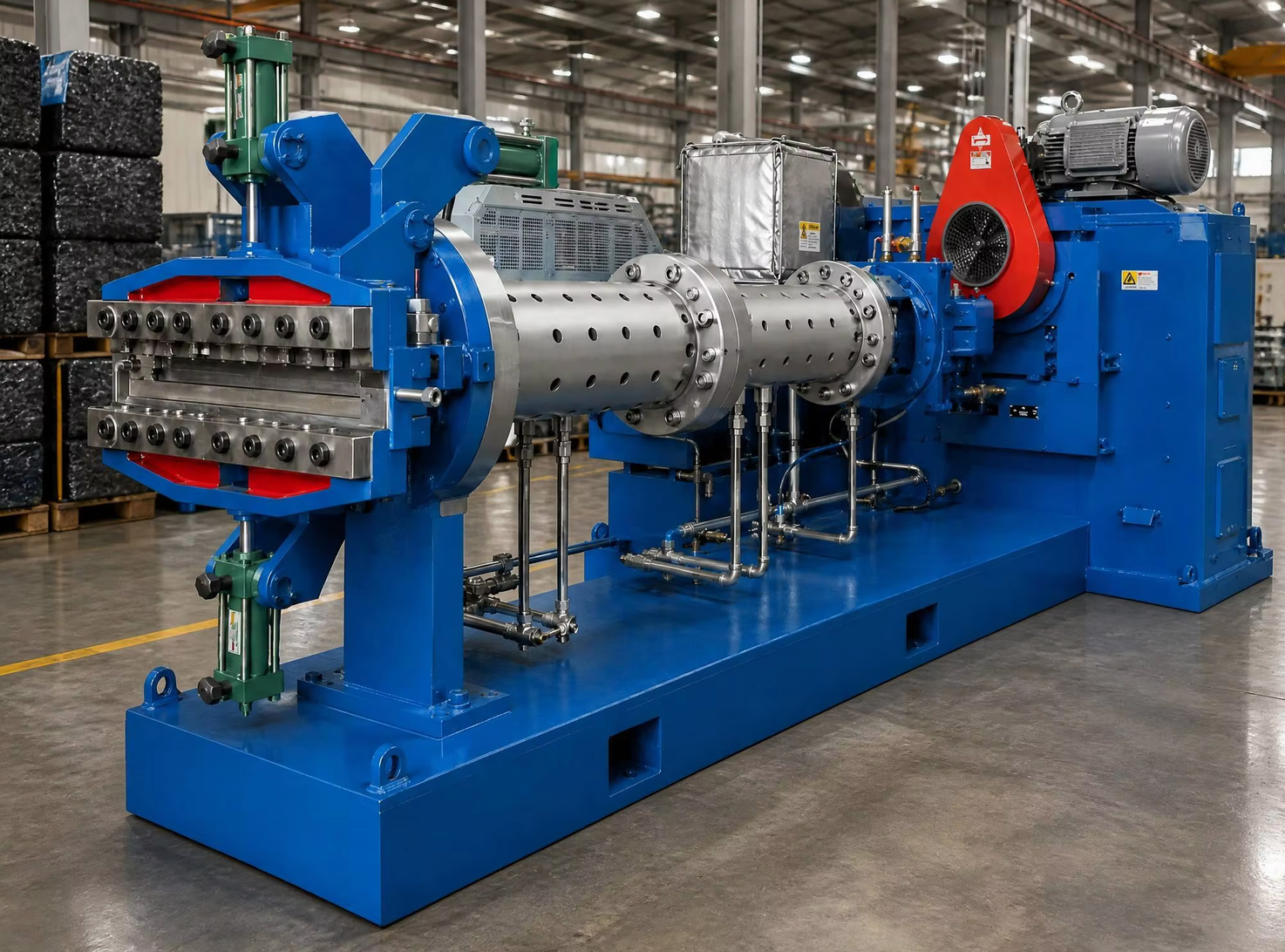
Rubber Extruder Screw Design Principles and Applications
Screw design determines the extrusion performance, output quality, and energy efficiency of rubber extruders. The screw geometry including diameter, length-to-diameter ratio, compression ratio, and flight configuration affects material conveying, melting, and mixing. Proper screw design is essential for achieving consistent output rates, good surface finish, and minimal temperature rise during extrusion.
The screw geometry including diameter, length-to-diameter ratio, compression ratio, and flight configuration affects material conveying, melting, and mixing. Cold feed extruders typically use longer screws with higher L/D ratios (12:1 to 18:1) for better temperature control and mixing. Hot feed extruders have shorter screws (6:1 to 10:1 L/D) and rely on pre-heated compound from upstream mixing equipment.
Pin barrel extruders incorporate stationary pins that create additional mixing zones for improved homogeneity. The pin arrangement, diameter, and number of rows all influence mixing effectiveness. Companies like Troester and Berstorff have developed advanced pin barrel designs for specific applications.
Screw materials must resist abrasion from filled compounds and corrosion from certain additives. Bimetallic barrels with hardened inner liners extend service life when processing abrasive compounds. Surface treatments like nitriding and chrome plating extend screw life. The Xaloy technical resources provide detailed information on screw and barrel materials.
Matching screw design to your specific rubber compounds and product profiles is essential for achieving optimal output rates and quality. Custom screw designs may be necessary for specialized applications like rubber compound filtration or devolatilization.
For rubber extruder screws and barrels, Hongdu Machinery supplies replacement screws and barrels manufactured from premium alloy steels with wear-resistant treatments, designed to match or exceed OEM specifications.
Technical resources from Polymer Solutions and research in Springer publications provide insights into extrusion mechanics and screw design optimization.


